
Air source heat pumps: an honest guide for UK homes
How air source heat pumps work, which homes suit them, what installation involves, and the practical questions worth asking before you commit.
Low carbon heating 9 min read
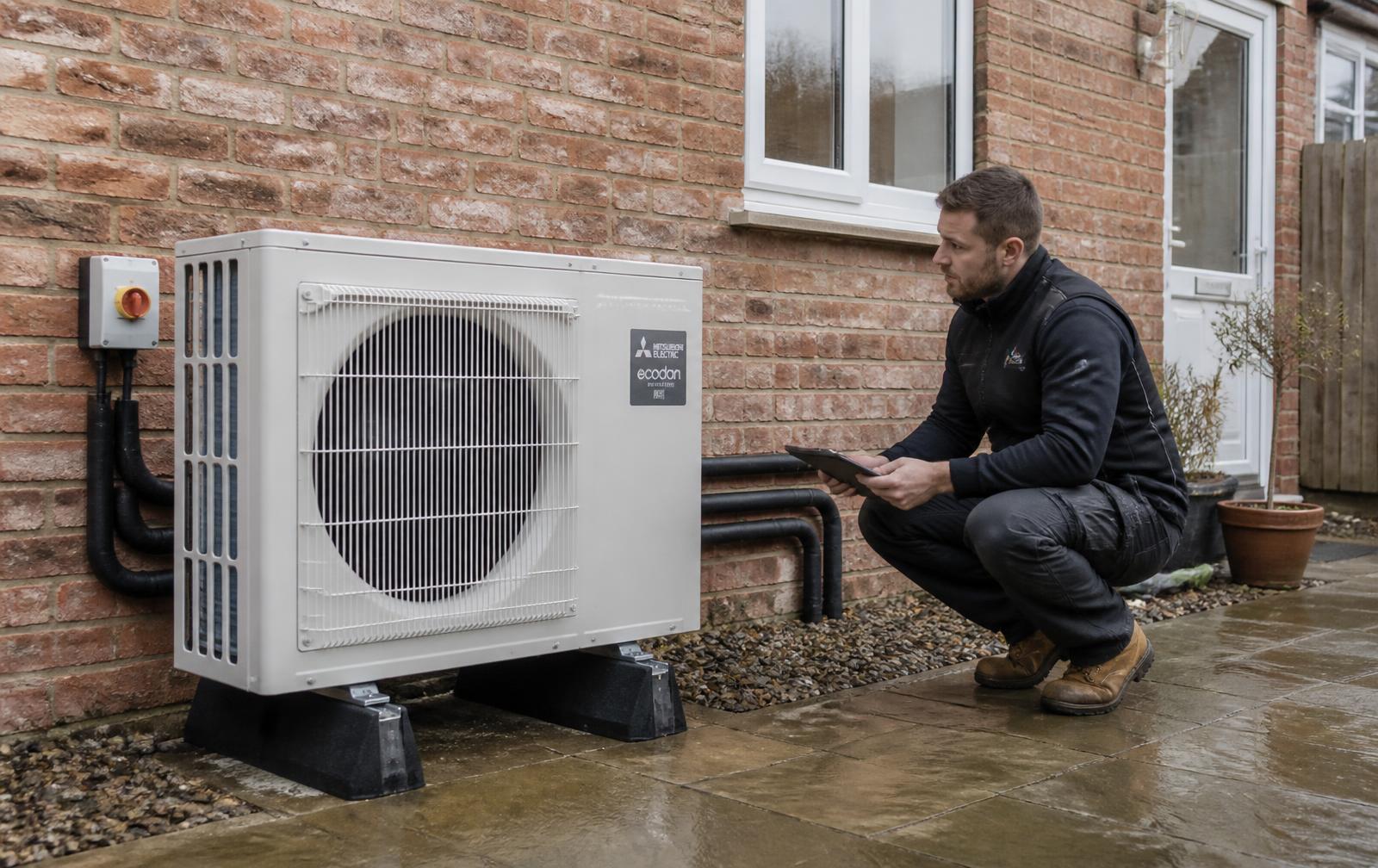
Air source heat pumps are the most talked about change in home heating for a generation, and also the most misunderstood. They are not simply a boiler in a different box. They heat a house in a different way, and they reward homes that are set up for them.
Here is a straight account of how they work, where they perform well, where they struggle, and what a proper installation involves.
How an air source heat pump actually works
A heat pump does not create heat by burning fuel. It moves heat that already exists in the outside air into your home, using a refrigerant circuit and a compressor, in much the same way a fridge moves heat out of its cabinet.
Because it moves heat rather than generating it, a heat pump can deliver roughly three to four units of heat for every unit of electricity it uses. That ratio is the coefficient of performance, and it is the number to focus on. It varies with the outside temperature and, crucially, with how hot you ask the system to run.
Low and slow: the biggest change to get used to
A gas boiler typically pushes water round the radiators at around 70 degrees in short bursts. A heat pump is most efficient at much lower flow temperatures, often between 35 and 50 degrees, running steadily for long periods.
That means radiators feel warm rather than hot, and the house is kept at a stable temperature instead of being blasted up twice a day. Most people adapt quickly, but it does mean the old habit of switching the heating on for an hour when you feel cold does not work well.
Is your home suitable?
Suitability is less about the age of the property and more about heat loss and emitter size. Plenty of older houses run heat pumps well once insulation and radiators have been addressed, and plenty of newer ones need little more than a straight swap.
- Loft and cavity insulation in reasonable condition, with draughts sealed
- Radiators large enough to give off heat at a lower water temperature, or underfloor heating
- Outside space for the unit with clear airflow and sensible distance from neighbouring windows
- Space indoors for a hot water cylinder, as heat pumps do not heat water on demand
- An electrical supply and consumer unit that can take the additional load
What a good installation looks like
A heat pump installation lives or dies on the survey. A room by room heat loss calculation determines the size of the unit and which radiators need upgrading. Undersize it and the house will not get warm in a cold snap; oversize it and it will cycle inefficiently and cost more than it should to run.
- Room by room heat loss survey and a radiator schedule before any quote is finalised
- Correctly sized unit, mounted on a level base with anti-vibration feet
- Pipework insulated to a proper standard outdoors, not left exposed
- A cylinder sized for the household, with an adequate coil for heat pump temperatures
- Weather compensation controls so flow temperature tracks the outside conditions
- A commissioning record showing the design flow temperature and settings actually used
Running costs and realistic expectations
Electricity costs more per unit than gas, so the savings come from efficiency rather than the fuel price. A well designed system running at a low flow temperature on a suitable tariff can compete with or beat gas. A poorly designed one running hot to compensate for undersized radiators will not.
That is the honest picture, and it is why the survey and the radiator work matter more than the badge on the outdoor unit. Grant funding is available in the UK to reduce the upfront cost, and eligibility rules change, so check the current scheme before budgeting.
Noise, planning and neighbours
Modern units are quieter than most people expect, comparable to a fridge at a few metres, but siting still matters. Position affects both noise and performance, so avoid tight corners that recirculate cold air and keep sensible distance from bedroom windows, including next door's.
Many installations fall under permitted development, but conditions apply and they differ for listed buildings, conservation areas and flats. Check before ordering equipment rather than after.
Living with one, and keeping it healthy
Set it and let it run. Leave the weather compensation to do its job rather than turning the thermostat up and down. Keep the outdoor unit clear of leaves, fencing and shrubs so air can flow freely through the coil.
An annual check keeps efficiency up: refrigerant pressures, system pressure, the cylinder and its immersion cycle, filters and the controls settings. Small drifts in setup can quietly cost a lot over a heating season.
Heat pump or new boiler?
If the radiators are already generous, the insulation is decent and you have room for a cylinder, a heat pump is a strong long term choice. If the property is hard to insulate, space is tight or the works need staging over time, a correctly sized modern boiler may be the sensible step now, with the pipework and emitters upgraded ready for a heat pump later.
Either way the answer should come from a survey of your property, not from a general rule.
Thinking about this work in your own home?
Tell us about your property and we will talk you through the options honestly, with no pressure.